
Recycled RPET lanyards: material, printing and buying advice
Recycled lanyards can be a practical material choice for a team or event, but 'eco' alone is not a specification. Understand what RPET refers to, which parts are recycled and what evidence your purchasing team needs. Then compare print, accessories and opportunities to reuse the finished band.
6 min read
What RPET means in a lanyard
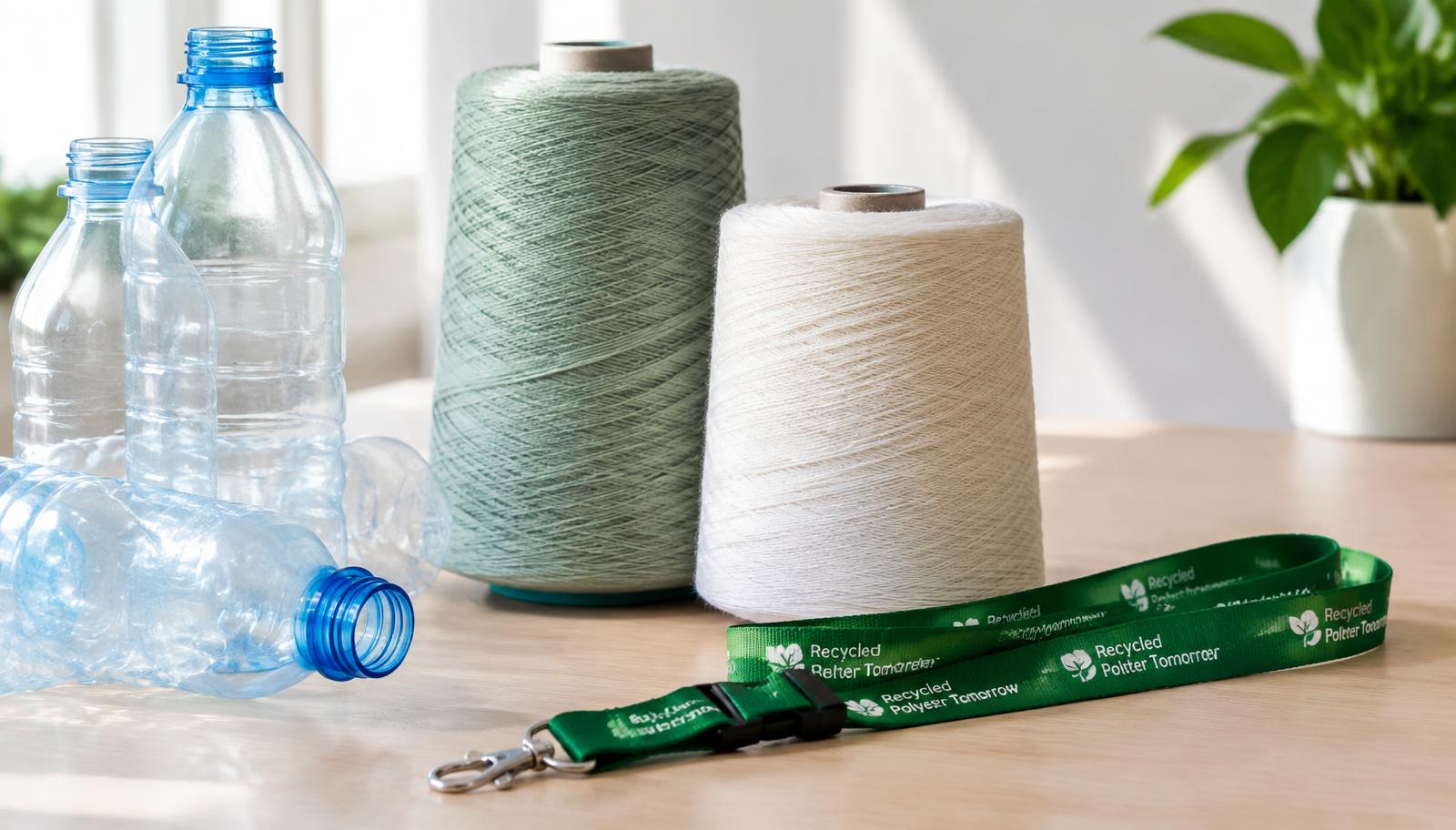
RPET means recycled polyethylene terephthalate, the plastic also used to make conventional polyester. For these lanyards, used PET bottles provide material for new yarn. The material is processed and spun before being woven into the strap; the choice concerns the source of the polyester rather than a different type of natural fibre.
Recycled polyester is still plastic. It should not be described as biodegradable, plastic-free or suitable for a household compost bin just because its feedstock is recycled. Giving an existing material another use is different from claiming that the finished accessory has no environmental impact.
Keep the wording specific: 'lanyard with recycled RPET webbing' describes a material choice more clearly than a sweeping claim about a completely sustainable product. Confirm any percentage or certification requirement for your exact specification before using it in purchasing reports or public statements.
RPET and standard polyester: what to compare
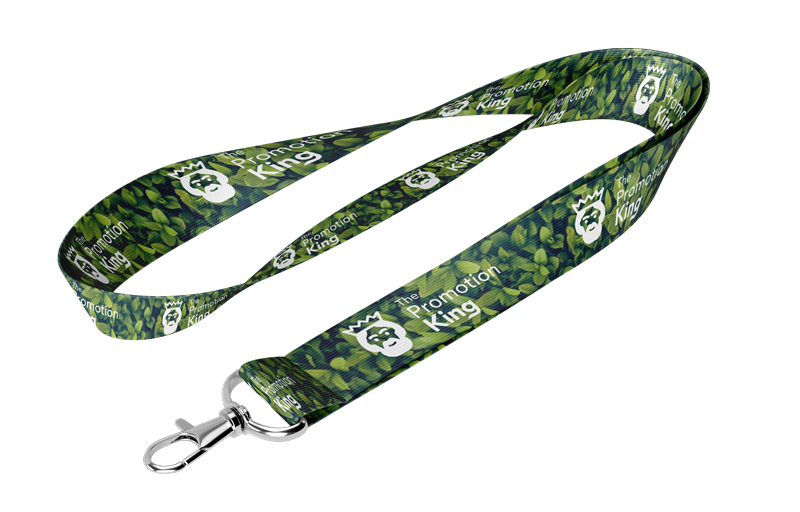
RPET lanyards look and feel similar to conventional polyester lanyards and can be printed in full colour. Compare them with the same width, print sides, quantity and attachments. Changing several options at once makes it difficult to see what the material choice contributes to the configured price.
If appearance or feel is critical for a uniform or an event, ask what can be checked before ordering. A digital proof shows the proposed design, not the physical texture of the webbing. Do not assume that the material source alone establishes identical colour, strength or performance for every possible specification.
| Question | Standard polyester | Recycled RPET |
|---|---|---|
| Material source | Conventional polyester | Recycled PET feedstock |
| Full-colour design | Available | Available |
| Accessory selection | Check chosen configuration | Check chosen configuration |
| Recycled-material evidence | Not established by the name | Confirm scope and documentation |
Printing recycled lanyards without limiting the design
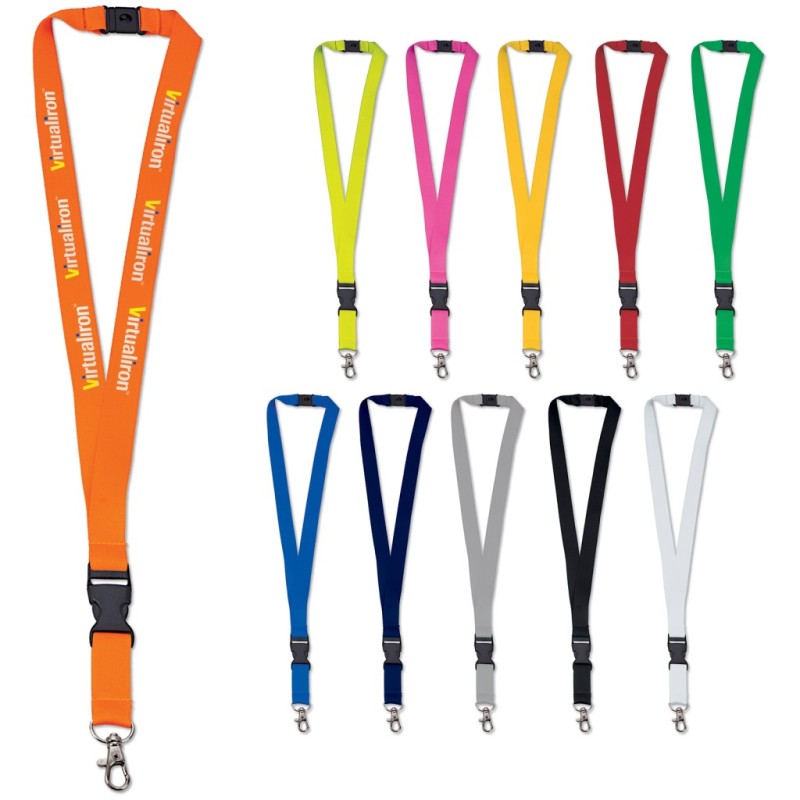
Choosing RPET does not require a green background or a leaf symbol. Use the organisation's branding and select readable contrast. Full-colour printing allows multicolour artwork; keep small details and text legible at the chosen width. Compare 10, 15, 20 and 25 mm using the matching artwork template.
Decide whether one or both sides should be printed and check each layout on the free digital proof. If you add a recycled-material statement, keep it accurate and brief. The product's material specification should determine the statement, not an environmental slogan added simply to make the artwork look greener.
For a reusable design, consider leaving out the year or a one-off event date. A neutral company logo or recurring programme name may let the same bands be used again. Keep personal names and information that changes frequently on a replaceable badge insert rather than on the strap.
Check certification scope, not just logos
The site displays certificates including GRS, REACH and TÜV. These labels are not interchangeable, and seeing a logo on a website does not by itself confirm the recycled content or certification of every finished combination. Ask which document applies to the product, supplier or process you are ordering.
For internal procurement, identify the requirement first: recycled content, traceability or a specific compliance document. Check the named organisation, validity period and stated scope of any supplied document. If your reporting needs an exact percentage or a product-specific declaration, request it before placing the order.
Avoid turning a general certificate into a claim that has not been demonstrated. In particular, do not assign a CO₂ saving or call the whole assembly certified without supporting evidence. A purchasing brief that names the required documentation is more useful than asking only for the 'most eco-friendly' band.
Recycled webbing is not the whole assembly
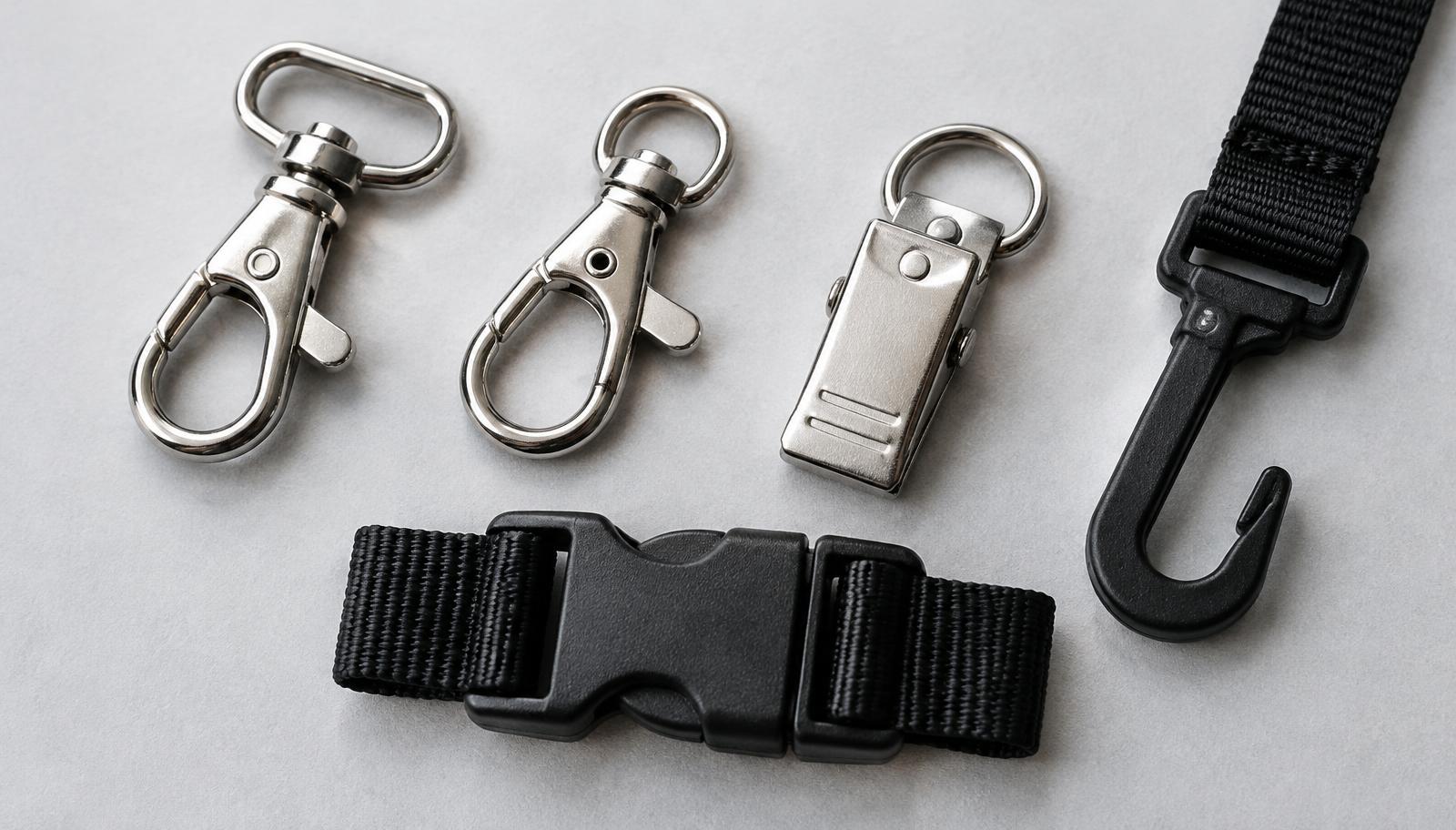
The completed item can include a metal hook, plastic buckle, reel and badge holder in addition to the RPET strap. Recycled webbing does not establish that those components are recycled too. List every required part and ask about its material separately if your organisation measures the composition of the whole accessory.
Choose the attachment around the job it needs to do. Adding several unused accessories uses more components and can complicate collection after an event. A straightforward hook and a reusable holder may be sufficient for one task; repeated scanning or workplace safety rules may require a different setup.

Plan reuse and end-of-use handling
A material choice is only part of the plan. Where appropriate, collect straps after an event, separate them from personal badge inserts and inspect them before reuse. Follow the organisation's cleaning and hygiene requirements; do not assume a printed band can tolerate any washing method.
At the end of use, ask the local waste or recycling service how a mixed assembly should be handled. A polyester strap with a hook and buckle is not automatically accepted in a household bottle recycling stream. Choose an order quantity that covers realistic needs without treating surplus stock as an environmental benefit.
- Quantity, width, artwork and required accessories
- Which components must contain recycled material
- Required supporting documents and their scope
- Reusable branding and collection arrangements
- Cleaning rules and local end-of-use options
Matching products
Larger quantity or special requirements? Request a free quote.
Frequently asked questions
Are RPET lanyards biodegradable?
No: recycled polyester remains plastic. Recycled feedstock does not establish biodegradability or compostability, so do not dispose of the band as if it were a natural fibre.
Is every part of an RPET lanyard recycled?
Do not assume that. RPET refers to the strap material. Check hooks, buckles, reels and holders separately if recycled content across the complete assembly is required.
Can recycled lanyards carry full-colour logos?
Yes, the RPET product supports full-colour printing. Select a suitable width and check the artwork, text and print sides on the free digital proof.
Can I claim a particular CO₂ reduction?
Not without evidence for the exact product and comparison. This guide does not provide a lifecycle calculation or a guaranteed percentage saving.
What should I ask for in a procurement quote?
Include quantity, print, width, accessories and any recycled-content or documentation requirement. Ask which supporting documents apply to your chosen specification before approving the order.
What is the minimum quantity?
Custom printed RPET lanyards start at 100 pieces. Compare complete configured specifications when deciding between RPET and standard polyester.
Design your RPET lanyard
Sustainable material, full-colour print, from 100 pieces.
More guides

6 min read
Lanyard with ID holder: choosing badges, hooks and safety breaks
Choose a lanyard with ID holder: compare badge formats, hooks, clips and breakaway options for work, healthcare and events. Custom print from 100 pieces.
Read guide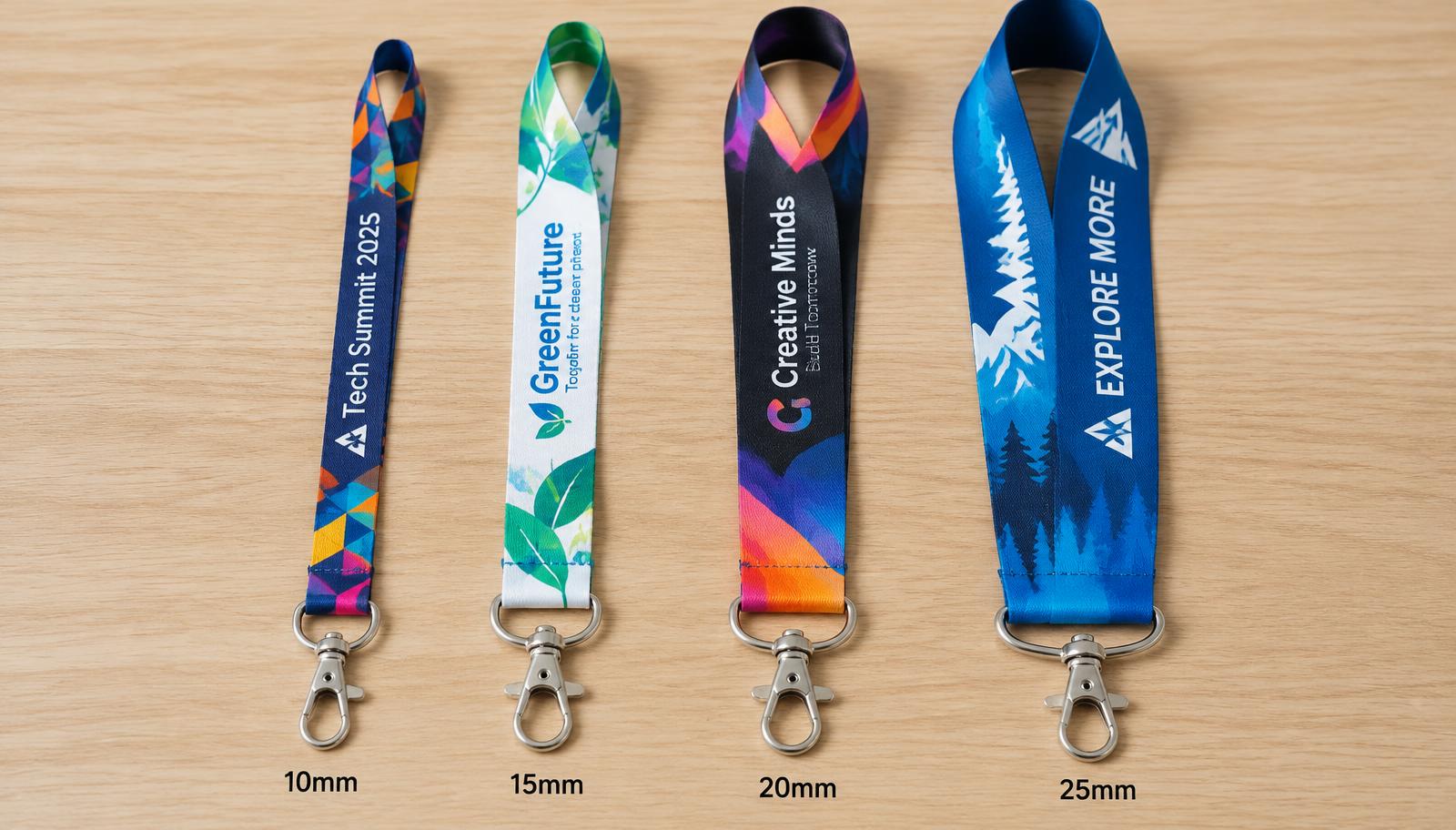
6 min read
Lanyard widths compared: 10, 15, 20 or 25 mm?
Which lanyard width suits your logo and use? Compare 10, 15, 20 and 25 mm lanyards with practical advice. Custom printed from 100 pieces.
Read guide
6 min read
Custom event and conference lanyards: a planning checklist
Planning lanyards for a trade fair, conference or festival? Timing, quantities and design tips in one checklist. Custom printed from 100 pieces.
Read guide